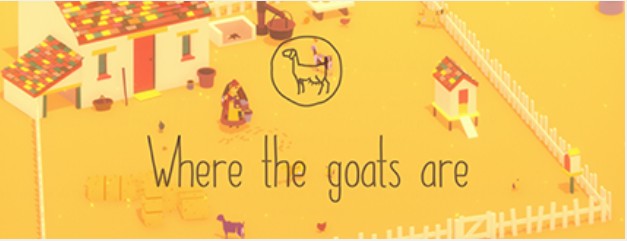
This is the title page of Where The Goats Are. with Tikvah and one of her goats
Look and listen in the game
I enjoyed playing the game “Where the Goats Are.” The game is unlike most games I’ve played before. It’s a slow-paced storytelling game about Tikvah, the main character. She is an old lady who lives alone on a farm with goats and chickens. Her family lives elsewhere, but they communicate with her by sending letters in the mail. It seems that goats are there to keep her company and give her the sense that she’s not alone. The goats provide milk to make cheese.
The graphics are unique and have a rustic yet artistic feel. The background is golden yellow, probably because the setting is in the desert. The goats are something you interact with in the game, getting milk and taking it to a fire pit next to the house to make cheese. You also interact with a merchant who brings food for the goats, the letters from Tikvah’s family, as he travels by her house. Tikvah seems almost half-rendered - she is like a colorful blob more than a person. But, that seems to be the artistic style of the game.
The sounds in the game seem appropriate for the game itself. The music is soft and soothing background music with a bit of a sad tone to it. You can also hear the chickens, some crows, and other animal noises in the game.
Comments on game
The game limits how much a player can explore, meaning you can’t go outside the area of the farm even though the game is called “Where are the Goats.” Tikvah is the only player-controlled character, but she interacts with the goats and with the merchant who comes to visit and make deliveries. The letters delivered by the merchant are how Tikvah interacts with her family. You can interact with the goats as Tikvah by feeding them and milking them.
The game is pretty much the same for the first 8 days or so. After day 8, the transitions from one day to the next are slightly different. At the end of the day later in the game, the screen goes black for a few seconds to mark the night to morning transitions. The goats got spooked by the crows on day 11. Then the changes in the goats’ behavior were communicated by text on the screen before the behavior changes were noticeable. Then on day 12 the goats were weakened and they died. The merchant even stopped visiting. By day 13, Tikvah was alone - it made me sad.
Interactions
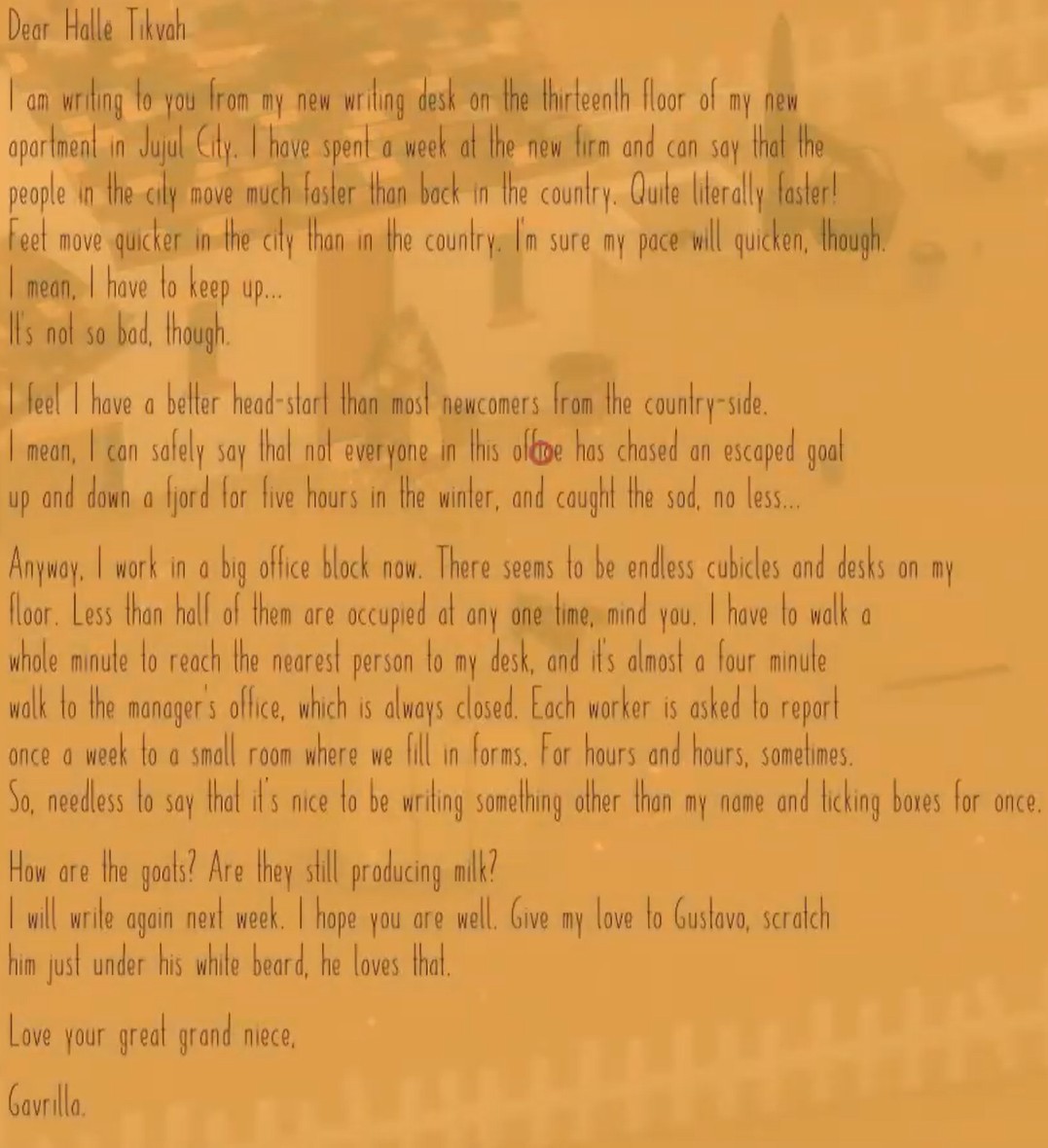
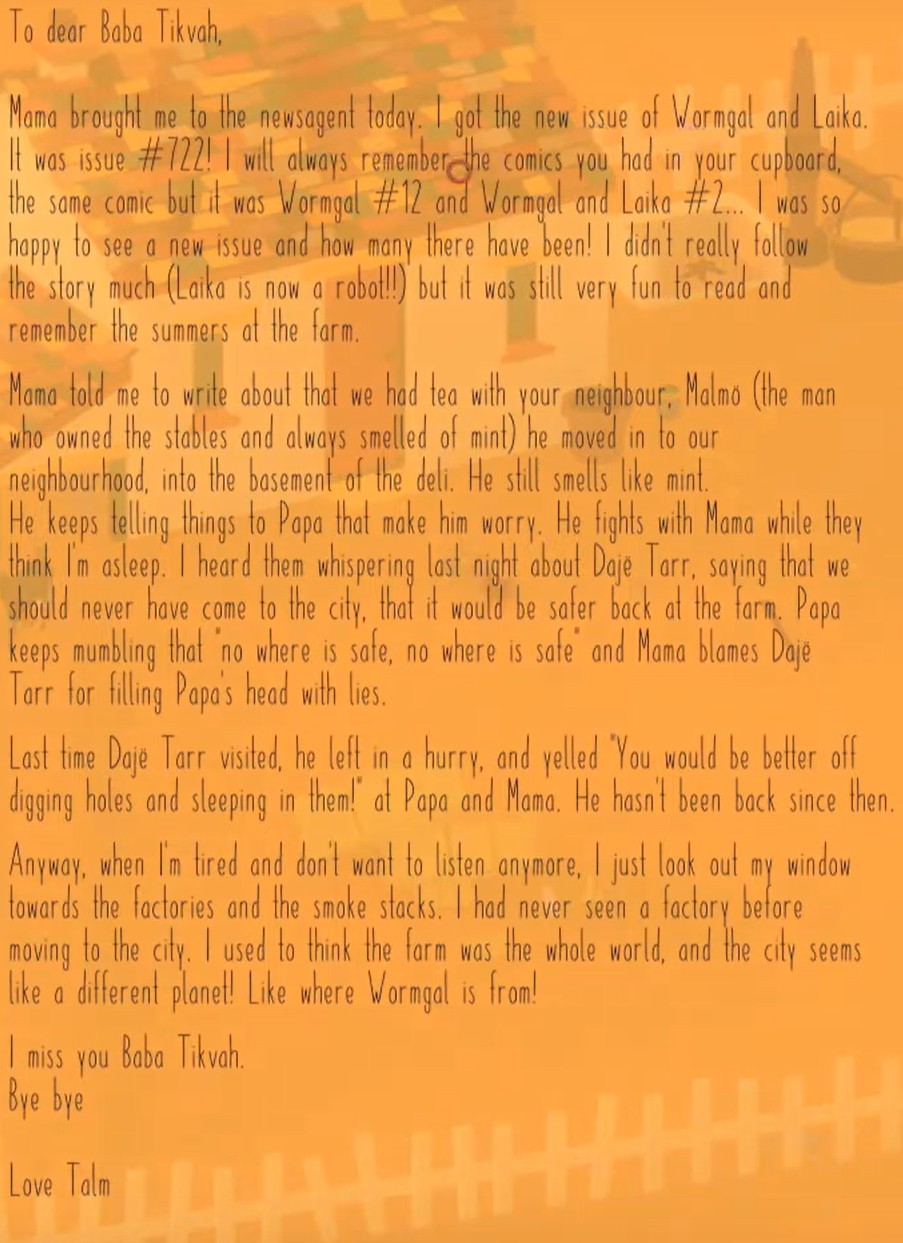
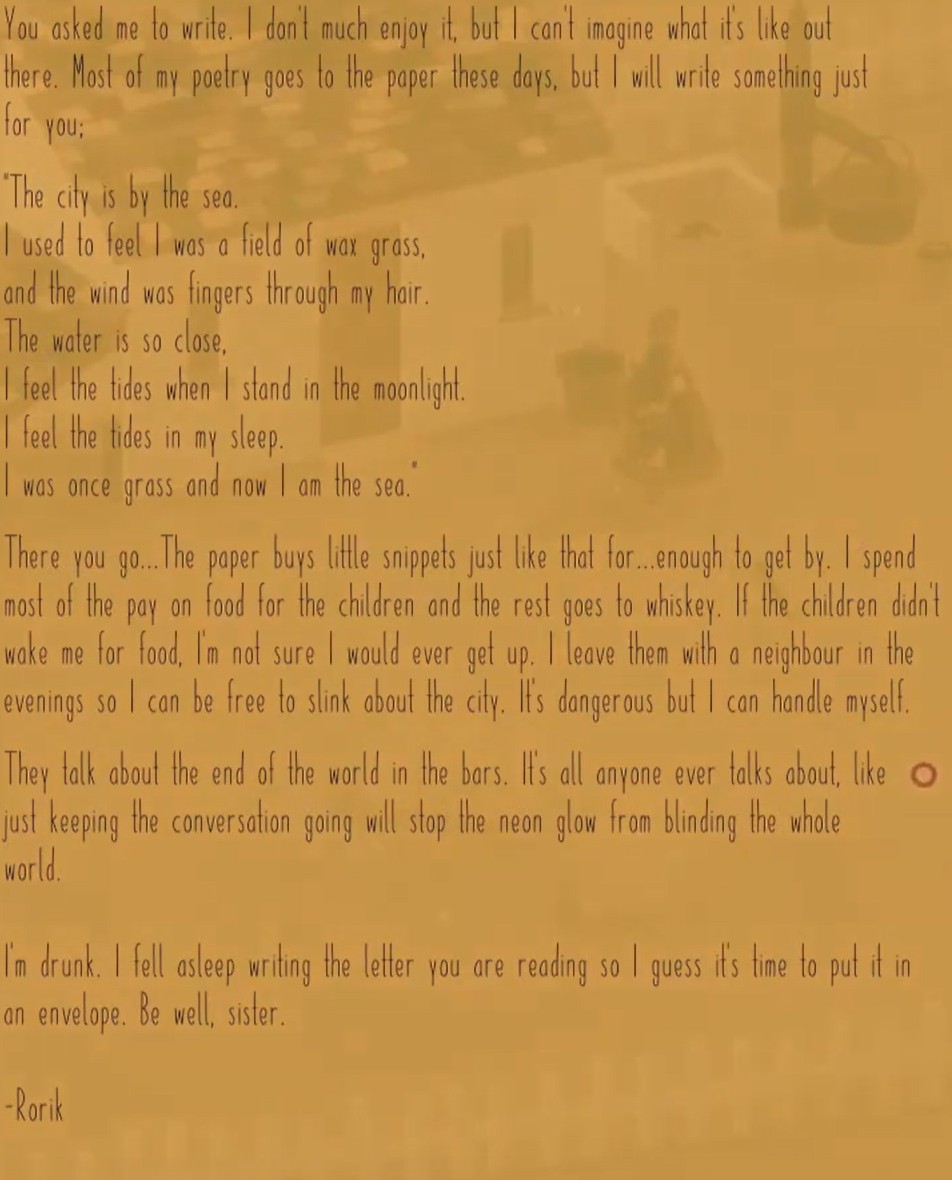
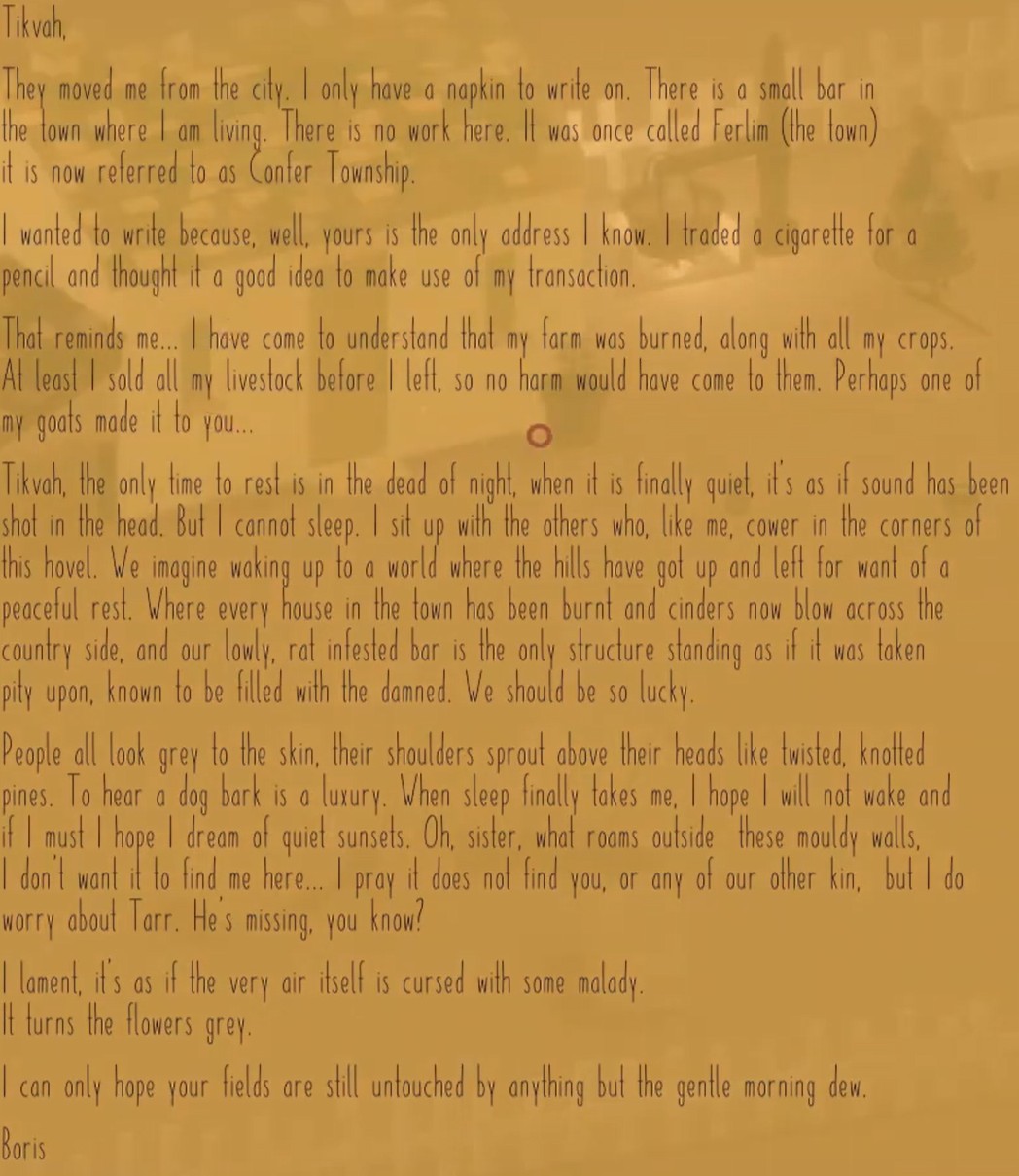
Some of the character interactions with Tikvah. Most of them are by letters delivered by the Merchant. She also interacts with the goats by milking them, and with the merchant by trading for hay to feed the goats and to get letters.
here are some of the letters that Tikvah recienes from the merchant throughout the game.
Challenges
The game was a bit challenging because initially, there were no instructions on how to feed the goats or make the cheese. After those tasks were mastered, the game was less challenging and more boring. But it seems that’s the nature of the game. It was also difficult to watch later in the game as all the goats and chickens presumably died, but there didn’t seem to be anything I could do about it. This was not a game that drew me to want to play it again because there are no “achievements” or incentives to earn. There was not much action, but that’s just the aesthetic of the game. It was also recommended that a player finish the game in one sitting, which only took about an hour. Maybe some people would like a game like that, but not me necessarily.
There are some similar themes to the real world happening in the game. It seems that there is an apocalypse that has happened in the city because those types of messages are coming from her family members who are writing to Tikvah. At first her family members were worried for Tikvah’s well-being, but the tables turned by the end to show more concern for what is happening in the city.
Speculation
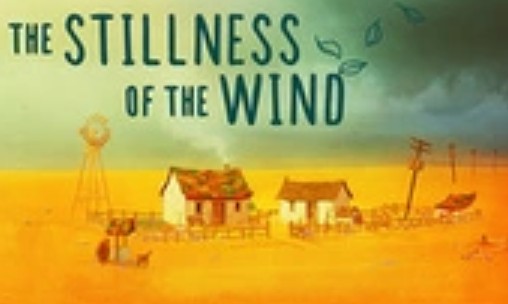
This game currently has a sequel called “The Stillness of the Wind.” It builds upon this game, but it’s slightly graphically updated and more interactive than “Where the Goats Are.” In the new version, the main character has a different name, but she seems like the same person. Tikva is now Talma. If it were to be updated again, it would be a great addition to meet or interact directly with some of the family members who have been sending letters to Talma.
This is the title page of The Stillness Of The Wind. The sequel of Where The Goats Are
Kumu Network
This is the Kumu network for Where The Goats Are. It is sized by betweeness and colored by tags.